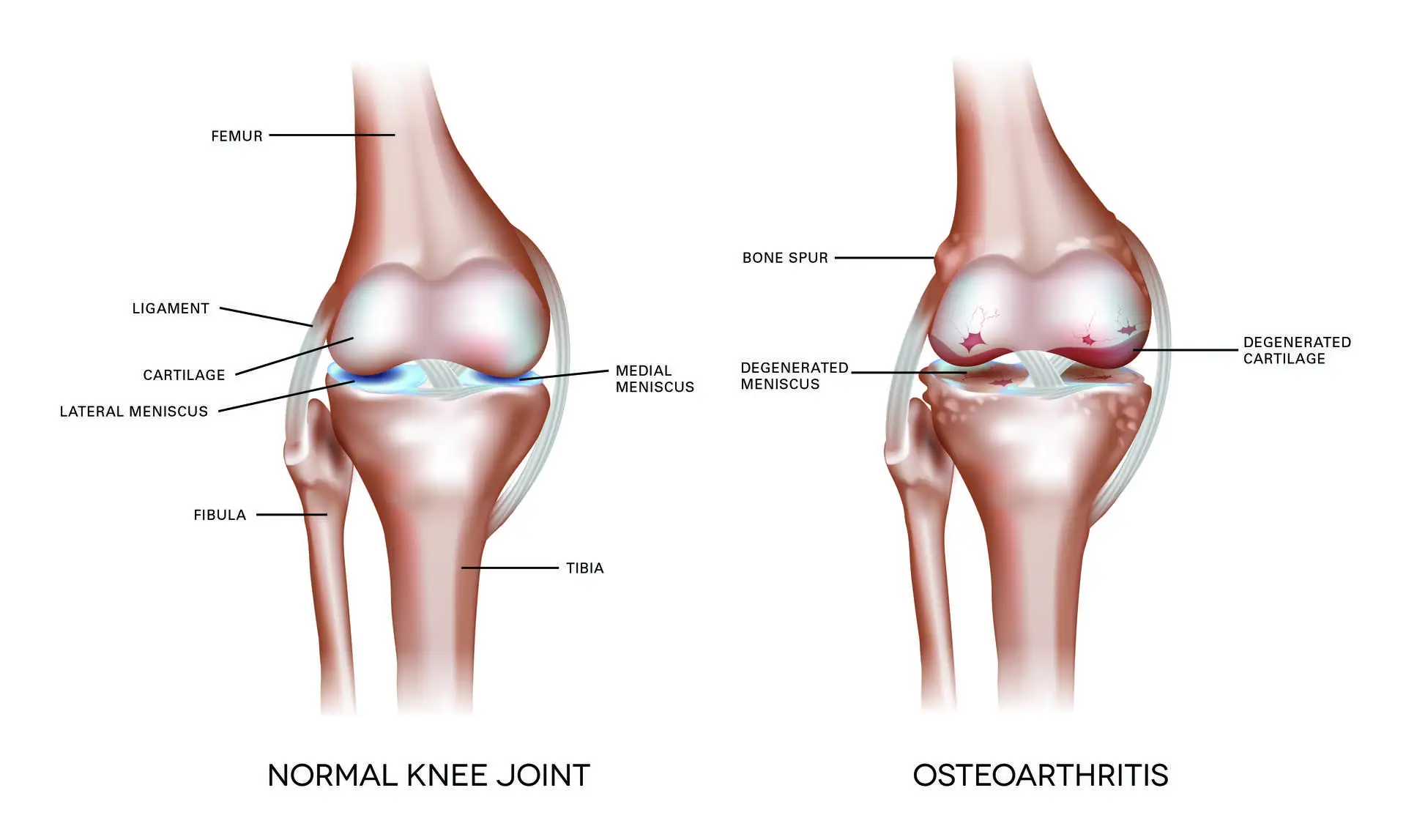
Knee osteoarthritis (OA) remains one of the most prevalent and challenging musculoskeletal conditions to manage, particularly in patients who are not yet candidates for surgery but continue to experience persistent pain and functional limitation.
Among non-surgical interventions, intra-articular viscosupplementation using hyaluronic acid (HA) has been widely adopted as a treatment option. However, its role continues to evolve in the context of emerging evidence, guideline variation, and advances in injectable therapies.
The rationale for viscosupplementation
Hyaluronic acid is a key component of synovial fluid, contributing to:
- Lubrication
- Shock absorption
- Joint homeostasis
In osteoarthritic joints, both the concentration and molecular weight of endogenous HA are reduced, leading to impaired viscoelastic properties.
Intra-articular viscosupplement injections aim to:
- Restore synovial fluid function
- Improve joint mechanics
- Provide symptomatic relief
In addition to mechanical effects, HA is thought to have:
- Anti-inflammatory properties1
- Effects on nociception1
- Potential to support cartilage protection1
Clinical effectiveness: what does the evidence show?
Clinical studies suggest that HA injections can provide:
- Modest to moderate pain relief
- Improvement in joint function
- A delayed onset of action (typically several weeks)
- Duration of benefit lasting several months2
However, outcomes can vary significantly depending on:
- Product characteristics (e.g. HA dose, molecular weight, cross-linking)
- Injection protocol (single vs multiple injections)
- Patient-specific factors
Hyaluronic acid vs corticosteroid injections
Intra-articular hyaluronic acid and corticosteroids are both widely used in the management of knee OA, but they offer distinct and complementary clinical profiles.
Corticosteroid injections are typically associated with the rapid onset of pain relief, often within days, making them particularly useful in patients with acute inflammatory symptoms. Their effects, however, are generally shorter-lived, with benefits diminishing over a few weeks.
In contrast, hyaluronic acid injections tend to have a slower onset of action but may provide more sustained symptom improvement over several months.2
These differences are clinically relevant when aligning treatment choice with patient needs, highlighting the importance of considering both speed and durability of response when selecting an intra-articular therapy.
Guideline perspectives: a nuanced landscape
Recommendations for viscosupplementation differ across major organisations:3,4,5
- Some guidelines are cautious due to variability in clinical trial outcomes
- Others support HA use in selected patients, particularly when other conservative treatments have failed
Across guidelines, there is general agreement that:
- HA is not always a first-line therapy
- It may be appropriate for patients seeking to delay surgery
- Individualised decision-making is essential3,4
This variability reflects the complexity of the disease as well as differences among available HA products.
Patient selection: a critical determinant of success
Not all patients with knee OA respond equally to viscosupplement injections.
Better outcomes are often observed in:
- Patients with mild-to-moderate OA
- Those with predominantly mechanical symptoms
- Patients without significant synovitis2
In contrast, patients may experience less predictable benefit with:
- Advanced structural damage
- High inflammatory burden
This has led to increasing interest in more tailored treatment approaches based on patient phenotype.
Practical considerations in clinical use
When considering intra-articular viscosupplement injections, clinicians may take into account:
- Treatment goals (rapid relief vs sustained improvement)
- Patient expectations
- Injection frequency and burden
- Prior response to therapies
Single-injection formulations are increasingly used for:
- Convenience
- Reduced procedural burden2
Evolving approaches: addressing the clinical gap
One of the ongoing challenges in knee OA management is balancing:
- Rapid symptom relief
- Sustained functional improvement
Traditional intra-articular options often address one of these aspects more strongly than the other.
This has led to growing clinical interest in:
- Combination approaches
- Treatments designed to provide both early pain relief and longer-term benefit
- Strategies that integrate anti-inflammatory and biomechanical mechanisms
These approaches aim to better align treatment effects with the complex and multifactorial nature of OA.
Conclusion
Viscosupplementation remains an important component of the non-surgical management of knee osteoarthritis, particularly in appropriately selected patients.
While its clinical role continues to be refined, key considerations include:
- The variability among HA products
- The importance of patient selection
- The need to balance onset and duration of effect
As treatment paradigms evolve, there is increasing focus on approaches that go beyond traditional categorisation, reflecting a more integrated understanding of OA pathophysiology and patient needs.